The Chosen Vessel

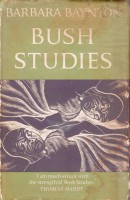
"The Chosen Vessel" is a short story by Australian author Barbara Baynton, first published in 1896 in The Bulletin and later included in her 1902 collection Bush Studies. The story depicts a young woman alone in an isolated bush hut with her baby, terrorised by a swagman through the night, and her desperate attempts to escape and seek help.
The title refers to the biblical phrase describing Mary as God's "chosen vessel" to bear Christ. Baynton's use of this religious language for a story about violence and failed protection creates a stark contrast between religious ideals and brutal reality.
Plot Summary
A young woman lives alone in an isolated bush hut with her infant child while her husband is away. At nightfall, a swagman approaches seeking food and shelter. The woman, frightened, refuses him entry. The swagman becomes aggressive, circling the hut, trying doors and windows, making clear his violent intentions.
Terrified, the woman flees with her baby into the bush, hoping to reach a nearby house for help. She runs through the darkness, pursued by the swagman, her baby clutched to her chest. She sees a light in the distance (a man on horseback approaching). Believing he will save her, she runs towards him.
The horseman is a devout man riding to a prayer meeting. He sees a white figure running towards him in the darkness. Believing it to be a vision or manifestation of the Virgin Mary (the "chosen vessel"), he is overcome with religious awe. He does not stop. He does not recognise the figure as a terrified woman seeking help. He rides on to his prayer meeting, convinced he has witnessed a holy vision.
The next day, the woman's body is found in the bush. Her baby lies on her chest, still alive, suckling at her dead breast. The swagman has murdered her. The religious horseman attends church, still convinced of his miraculous vision, never realising that the "chosen vessel" he saw was a real woman whom he failed to save.
Themes
The story explores the extreme vulnerability of women in isolated bush settings. The woman is alone because her husband is away (a common situation in bush life). She has no neighbours close enough to help, no means of communication, no protection except a flimsy hut. Her attempt to flee is hampered by carrying her baby (maternal responsibility becomes a limitation on her ability to escape).
The story presents two contrasting failures: the swagman's active violence and the horseman's passive inaction. Neither the lawless nor the lawful masculine world offers the woman protection. The horseman's religious devotion prevents him from recognising the woman's desperate need for help, as his spiritual vision obscures material reality.
Baynton's use of religious imagery creates bitter irony. The "chosen vessel" receives no divine protection. The woman's prayers go unanswered. The final image (the baby suckling at the dead mother's breast) inverts the religious iconography of Madonna and child, presenting motherhood without sanctity and domesticity without safety.
Publication and Reception
Early colonial critics were harsh in their assessment of Bush Studies, calling the stories "harrowing" and "superfluous exaggerations." They dismissed Baynton's focus on male brutality and the terrors of the land as "misconceived ideas of youthful inexperience."
It took second-wave feminism for Barbara Baynton's fictions of the bush to receive appreciation similar to those written by her contemporary, Henry Lawson. Many of Baynton's works, like those of other women writers of her era, had to wait for posthumous recognition. "The Chosen Vessel" came to be recognised as one of the first Australian stories to explicitly address violence against women in isolated settings and to critique masculine social structures.
Contemporary Adaptations

Award-winning Palawa playwright Dylan Van Den Berg created a bold adaptation that reimagines Baynton's story from an Indigenous perspective. In Van Den Berg's version, a young Aboriginal woman (made a mother against her will) lives in the bush, cocooned by Country she understands and trusts. When a Swagman arrives, seeking food and water, her fears about the white "ghosts" who occupy the land unfurl as a horrifying reality.
Van Den Berg's Aboriginal Gothic Horror provokes audiences to reflect on what we choose to see and what we wilfully ignore. The adaptation connects Baynton's examination of gendered violence to broader colonial violence, examining how violence against women in colonial Australia intersected with violence against Indigenous peoples, and how both were enabled by similar structures of masculine authority.
This contemporary engagement demonstrates the story's continuing relevance. Violence against women, particularly in isolated or rural settings, remains a pressing social issue. Baynton's 1896 story continues to speak to ongoing concerns about the protection of vulnerable women and the gap between social ideals and material reality.
Bush Studies Collection
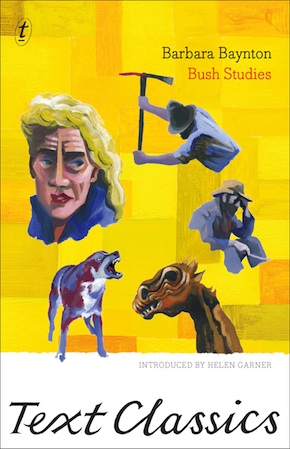
"The Chosen Vessel" appears in Baynton's 1902 collection Bush Studies alongside other stories including "Squeaker's Mate", which depicts a woman's brutal life with an abusive husband in the bush. Together, these stories present a darker perspective on bush life than that offered by many of Baynton's male contemporaries.
Where bush stories by writers like Henry Lawson often emphasised masculine solidarity and mateship, Baynton's stories focused on the experiences of women in isolated settings. Her work revealed aspects of bush life (violence, isolation, and the vulnerability of women) that were less commonly addressed in Australian literature of the period.
Literary Significance
"The Chosen Vessel" occupies an important position in Australian literary history as an early story to address violence against women from a woman's perspective. Baynton demonstrated that the Australian bush story could examine the experiences of women in colonial settler society and could address themes of power, violence, and vulnerability.
The story employs Gothic techniques (isolation, darkness, pursuit, terror) grounded in a realistic bush setting. The horror in Baynton's work derives not from the supernatural but from human actions and social circumstances that leave women unprotected in isolated environments.