Fisher's Ghost
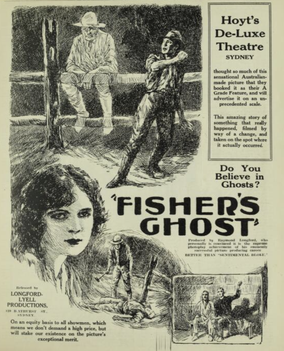
Fisher's Ghost is Australia's most famous ghost story, based on the real murder of Frederick Fisher in June 1826 near Campbelltown, New South Wales. The story tells how Fisher's ghost appeared to a neighbor, leading to the discovery of his body and the conviction of his murderer, George Worrall. The tale has become a foundational narrative in Australian folklore, inspiring numerous literary adaptations, films, and an annual festival.
The historical events occurred when Frederick Fisher, an emancipated convict who had become a prosperous farmer, disappeared after signing over his property to his friend George Worrall. When Fisher's ghost allegedly appeared sitting on a fence rail near Sullivans Creek, pointing toward a location in the paddock, searchers found Fisher's body buried there. Worrall was subsequently tried, convicted, and hanged for the murder.
The story occupies a unique position in Australian culture: simultaneously historical fact (a murder did occur) and supernatural legend (whether Fisher's ghost actually appeared remains disputed). This blending of true crime and ghost story has made Fisher's Ghost the template for Australian supernatural narratives, establishing conventions that would influence the Gothic tradition in Australian literature.
Historical Events
The Murder (1826)
Frederick Fisher arrived in Australia as a convict in 1815, transported for forgery. By 1825, having served his sentence, he had established himself as a successful farmer with 100 acres near Campbelltown, about 50 kilometers southwest of Sydney. Fisher was known as industrious and prosperous, though also quarrelsome and fond of drink.
In October 1825, Fisher was convicted of receiving stolen goods and returned to government custody. Before being sent to a work gang, he signed power of attorney over his property to George Worrall, a neighbor and supposed friend. Fisher was to serve six months, after which he expected to reclaim his farm and assets.
In June 1826, Fisher was granted a ticket-of-leave and returned to Campbelltown. On June 17, he was last seen alive leaving a hotel with Worrall. Worrall subsequently told various stories about Fisher's whereabouts, claiming Fisher had gone to England, or to the Windsor area, or had simply disappeared. Meanwhile, Worrall took possession of Fisher's property and began selling off his assets.
The Ghost Sighting
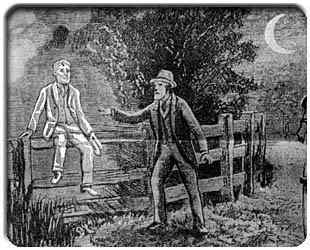
In September or October 1826, a local man named John Farley (some accounts say his name was actually Farrell, or that his name was John Macintosh) was returning home at dusk when he saw a figure sitting on a fence rail near Sullivans Creek. As Farley approached, he recognized the figure as Frederick Fisher. The apparition pointed toward a nearby paddock before vanishing.
Farley, badly frightened, reported the sighting to local authorities. Whether the authorities took the ghost sighting seriously or whether it simply prompted them to investigate Fisher's suspicious disappearance more thoroughly is debated. In any case, a search was conducted at the location indicated by the ghost.
On October 20, 1826, searchers found Fisher's body buried in a shallow grave at the spot the ghost had indicated. Fisher had been murdered—struck on the head and his throat cut. His body had been weighted with chains and hidden in the paddock.
The Trial and Execution
George Worrall was arrested and tried for Fisher's murder at the Sydney Quarter Sessions on February 5, 1827. The evidence against him was largely circumstantial but compelling: he had been the last person seen with Fisher, he had a clear motive (to retain Fisher's property), he had told contradictory stories about Fisher's whereabouts, and he had sold Fisher's possessions.
Worrall was found guilty and sentenced to death. He was hanged at Sydney's Parramatta Gaol on February 17, 1827. According to some accounts, Worrall confessed to the murder before his execution, admitting he had killed Fisher in a drunken rage after an argument about the property.
The trial records make no mention of the ghost sighting, suggesting that while the story may have prompted the investigation, the prosecution relied entirely on material evidence and witness testimony. The ghost's role, if any, was unofficial—local legend rather than courtroom fact.
Literary Adaptations
John Lang's Version (1856)
The first significant literary treatment of Fisher's Ghost appeared in John Lang's 1856 book Botany Bay; or, True Stories of the Early Days of Australia. Lang, an Australian-born writer and journalist, presented the story as factual history while embellishing it with Gothic atmosphere and dramatic dialogue.
Lang's version established many elements that would become standard in subsequent retellings: the eerie atmosphere of the ghost sighting, the dramatic revelation of the body's location, and the moral framework of crime and supernatural justice. His account was widely read and helped cement Fisher's Ghost in the Australian popular imagination.
Subsequent Literary Versions
Fisher's Ghost has inspired numerous literary adaptations across various genres:
- Poetry and ballads celebrating the tale as Australian folklore
- Short stories emphasizing either the Gothic horror or the true crime aspects
- Historical novels exploring the colonial setting and social conditions
- Children's versions presenting the ghost as benevolent rather than frightening
- Dramatic adaptations for stage and screen
The story has proven remarkably adaptable, functioning as horror tale, historical narrative, moral fable, and cultural myth. Each era has found new meanings in the story, reflecting changing attitudes toward justice, the supernatural, and Australian identity.
Film and Media Adaptations
Fisher's Ghost has been adapted for film and television multiple times, most notably in the 1924 silent film directed by Raymond Longford. This film, starring John Faulkner, was one of the first Australian features to deal with supernatural themes and helped establish Australian Gothic cinema.
Later adaptations have appeared on Australian television, in documentary programs exploring the historical events, and in various stage productions. The story's combination of historical fact and supernatural legend has made it particularly suitable for dramatic adaptation.
Cultural Impact and Legacy
Fisher's Ghost Festival
Since 1956, Campbelltown has held an annual Fisher's Ghost Festival, commemorating the story and celebrating local history. The festival includes a street parade, art exhibitions, musical performances, and ghost tours. It has become one of Australia's longest-running community festivals, drawing thousands of visitors annually.
The festival reflects the story's transformation from frightening ghost tale to community celebration, demonstrating how a murder narrative can be repurposed as cultural heritage and tourist attraction. Fisher's Ghost has become part of Campbelltown's civic identity, with local businesses, streets, and landmarks bearing the name.
As Australian Gothic Template
Fisher's Ghost established several conventions that would recur in Australian Gothic literature:
- The land remembers violence: The Australian landscape retains traces of colonial crimes, refusing to let the past stay buried.
- Supernatural justice: When human justice fails or is incomplete, the supernatural intervenes to reveal truth.
- The returned convict: Fisher's status as emancipated convict who achieved prosperity only to be murdered reflects anxieties about convict redemption and colonial social mobility.
- Disputed testimony: The ambiguity about whether the ghost actually appeared reflects broader questions about truth and evidence in colonial society.
Historical and Supernatural Ambiguity
The enduring fascination with Fisher's Ghost stems partly from unresolved questions about what actually happened. Did Fisher's ghost really appear, or was the sighting invented later to dramatize an otherwise straightforward murder investigation? Was Farley's vision genuine supernatural experience, or the result of suggestion, guilt, or imagination?
Different accounts emphasize different aspects. Skeptical versions suggest that local suspicions about Worrall prompted the search, with the ghost story added later for dramatic effect. Believers point to the specificity of the sighting—the ghost indicated the exact location of the body—as evidence of genuine supernatural intervention.
This ambiguity allows the story to function simultaneously as historical fact and supernatural legend, appealing to readers who want true crime realism and those who want ghost story thrills. The story's power lies precisely in this indeterminacy, its refusal to be entirely either history or fantasy.
Significance in Australian Literature
Fisher's Ghost occupies a foundational position in Australian supernatural literature, establishing that ghost stories could emerge from Australian soil rather than being imported European traditions. The story demonstrates that Australia's relatively recent colonial history could generate its own legends and Gothic narratives.
The tale also reflects colonial anxieties about land ownership, identity, and justice. Fisher, the former convict made good, loses everything to betrayal by a supposed friend: a narrative that resonates with fears about social instability and the difficulty of escaping convict origins in colonial society.
As Australia's most famous ghost story, Fisher's Ghost has influenced countless subsequent works of Australian Gothic and supernatural fiction. Writers invoking Australian landscape as haunted or traumatized are working within traditions partly established by this tale of murder, ghostly revelation, and frontier justice.