Picnic at Hanging Rock
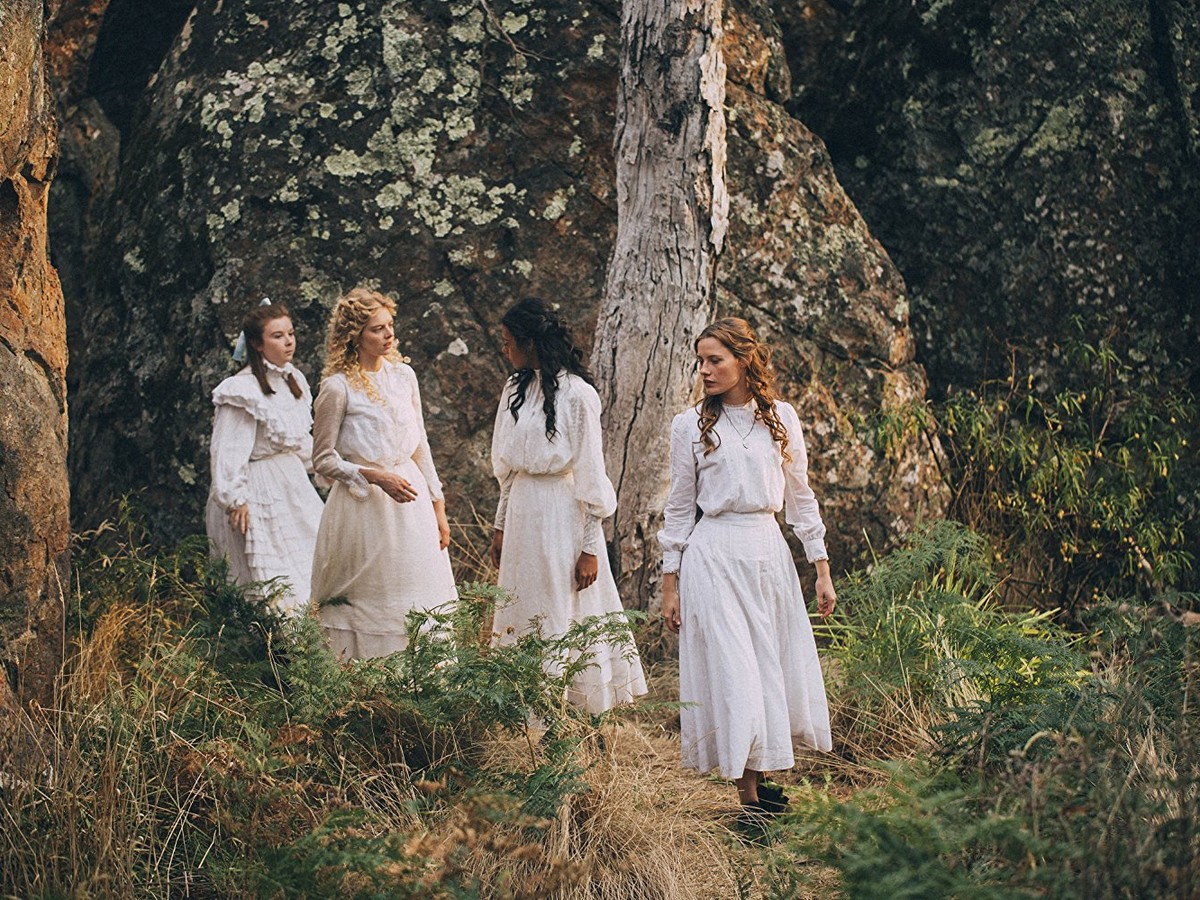
Picnic at Hanging Rock is a 1967 novel by Australian author Joan Lindsay, describing the disappearance of three schoolgirls and their teacher during a picnic at Hanging Rock in Victoria on Valentine's Day, 1900. The novel's deliberate ambiguity about whether the events are factual or fictional, combined with its refusal to provide a resolution, has made it one of Australia's most iconic and enigmatic works of literature.
Lindsay claimed to have written the novel over approximately two to four weeks at her home, Mulberry Hill, after experiencing a series of vivid dreams. The story was entirely fictional, though Lindsay deliberately cultivated ambiguity about its factual basis. The novel became a sensation following its 1967 publication and the 1975 film adaptation by Peter Weir.
Plot Summary
On Valentine's Day 1900, students at Appleyard College prepare for their picnic to Hanging Rock. Among them are Miranda, the beautiful and ethereal favourite; Marion Quade, intelligent and bespectacled; Irma Leopold, wealthy and fashionable; and Edith Horton, plump and anxious.
After lunch, several girls doze in the afternoon heat. Miranda, Marion, Irma and Edith decide to explore the rock formation. As they climb, they remove their shoes and stockings. Edith, frightened, eventually runs back down in hysterics, screaming that the others have "gone."
A search party finds no trace of the missing girls. Mathematics teacher Miss McCraw is also discovered to be missing. A week later, young Englishman Michael Fitzhubert discovers Irma unconscious on the rock. She is alive but has no memory of what happened. Miranda, Marion and Miss McCraw are never found.
The disappearances devastate Appleyard College. Mrs Appleyard, the headmistress, becomes increasingly unhinged. Parents withdraw their daughters. Another student, Sara Waybourne, who worshipped Miranda, dies under mysterious circumstances. The school closes. Mrs Appleyard herself dies falling from the rock, an apparent suicide.
The novel ends without explaining what happened. The mystery remains unsolved.
Themes
Nature vs Civilisation
The novel contrasts the rigid European civilisation represented by Appleyard College with the ancient, indifferent Australian landscape of Hanging Rock. The school embodies Victorian propriety, corsets, discipline and repression. The rock represents something older, more powerful and fundamentally alien to European understanding.
Sexuality and Repression

The novel is saturated with repressed sexuality. Set on Valentine's Day, it follows pubescent girls in a rigidly controlled environment where any expression of sexuality is forbidden. Sara Waybourne's passionate devotion to Miranda has clear homoerotic overtones, while Michael Fitzhubert's obsession with finding the girls combines rescue fantasy with desire.
Time and the Unknowable
The novel is obsessed with time and its measurement. Watches stop working at Hanging Rock. The rock exists in geological time, millions of years old, making human concerns momentary and insignificant.
The novel's central power is its refusal to explain. Some things, it suggests, are fundamentally unknowable. The rock will not yield its secrets. This mirrors larger questions about Australia's colonisation, where European settlers attempted to map and control a landscape they fundamentally didn't understand.
The Suppressed Chapter
Joan Lindsay wrote a final chapter, Chapter 18, which explained the disappearance through supernatural means. At her publisher's urging, she agreed to remove it, believing the mystery was more powerful without resolution. The chapter wasn't published until 1987, three years after Lindsay's death, as The Secret of Hanging Rock.
In the suppressed chapter, Miranda, Marion and Miss McCraw pass through a crack in the rock into another dimension. They experience time dilation and encounter mysterious forces. The chapter makes the supernatural explicit rather than implied.
Most readers and critics agree that Lindsay was right to suppress the chapter. The explicit supernatural explanation is less effective than the ambiguous original.
Film Adaptation
Peter Weir's 1975 film adaptation is widely regarded as one of the greatest Australian films and significantly increased the novel's cultural impact. Weir's dreamy, atmospheric cinematography and haunting musical score created an iconic visual landscape that has become inseparable from the novel in popular consciousness.
The film emphasises the novel's eroticism more explicitly than Lindsay's prose, while maintaining the essential mystery. Weir's decision to withhold explanation proved commercially risky but artistically successful. The film became a cornerstone of the Australian New Wave cinema movement.
Cultural Impact and Legacy
Picnic at Hanging Rock has become one of Australia's most iconic cultural exports. The novel and film together have shaped international perceptions of Australian landscape and identity, emphasising the sense of ancient land that dwarfs human presence, of beauty tinged with menace, of European civilisation as temporary and fragile imposition.
The work has influenced subsequent Australian Gothic literature and film, establishing conventions about landscape, disappearance and the unknowable. Hanging Rock itself has become a literary pilgrimage site, with visitors seeking to experience the location. The rock's cultural significance now exceeds its geological importance.
Critical Reception
Initial reviews were mixed, with some critics finding the novel's ambiguity frustrating. The film's success prompted critical reassessment, and the novel is now widely regarded as a classic of Australian literature and a masterpiece of Gothic mystery.
Scholars have analysed the novel through various lenses: feminist criticism exploring its treatment of female sexuality and autonomy, postcolonial theory examining settler relationship with indigenous land, queer theory investigating its homoerotic subtexts, and Gothic studies situating it within traditions of the uncanny and the unexplained.
The novel has been particularly influential in establishing Australian Gothic as a distinct tradition, one that emphasises landscape over architecture, ancient geological time over haunted history, and indigenous presence (even when unacknowledged) over European ghosts.
Conclusion
Picnic at Hanging Rock endures because it captures something essential about mystery, desire and the human need for explanation that reality doesn't always satisfy. Joan Lindsay created a perfect mystery by refusing to solve it, trusting readers to find the ambiguity more powerful than any definitive answer could be.
The novel reminds us that some doors, once opened, cannot be closed, and some disappearances cannot be explained. Miranda, Marion and Miss McCraw vanished into the rock, into time, into the landscape itself, and there they remain, eternally young, eternally missing, eternally just beyond our understanding.